|
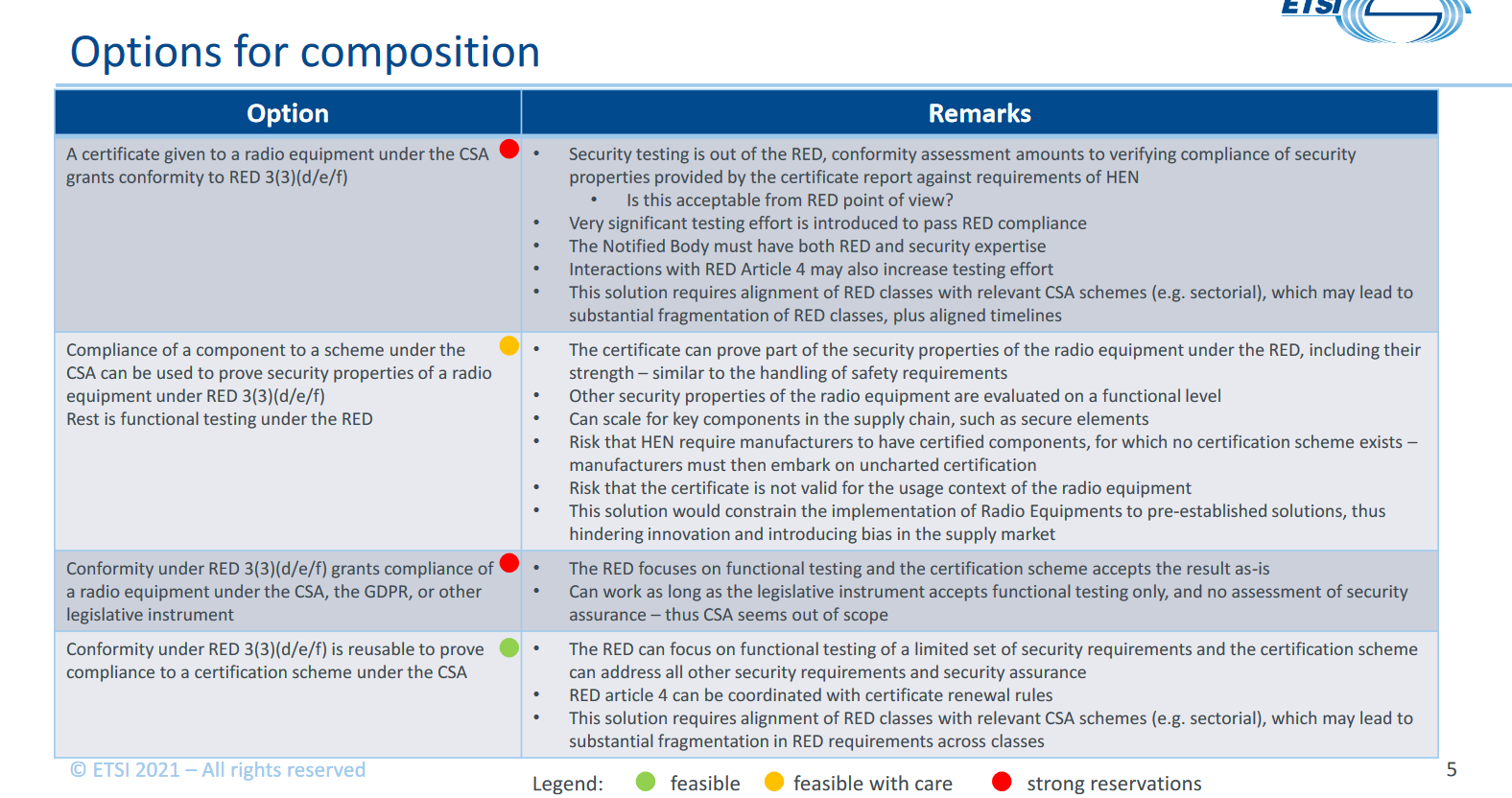
In an ideal scenario, companies could ensure compliance with RED and the future horizontal act with one testing.
Nelly Ghaoui, Dutch Ministry of Economic Affairs, presented the Dutch perspective. In the Netherlands, the government supports testing by consumer organisations to improve market transparency. The government is also looking at public procurement policy to encourage products with a higher ICT security level. Nelly Ghaoui lamented that products cannot currently be taken off the market if they do not live up to the right cybersecurity level.
Dieter Wegener, DKE Vice-president, presented the BDI-DIN-DKE paper on the bridge between the NLF and the CSA (see previous briefing here).
Panel Standardisation supporting the Cybersecurity Act:
Elena Santiago Cid, Director General of CEN-CENELEC, underlined the importance of cooperation with ISO and IEC to have one single solution whenever possible, thereby facilitating international trade. She presented the CEN-CENELEC Committees involved in cybersecurity standardisation:
-CEN-CENELEC JTC13 cyber and data protection
-CLC TC 65X Industrial-process measurement, control and automation
-Sectors-specific activities: health, transport, manufacturing, electrotechnology, energy, AI, blockchain, quantum etc.
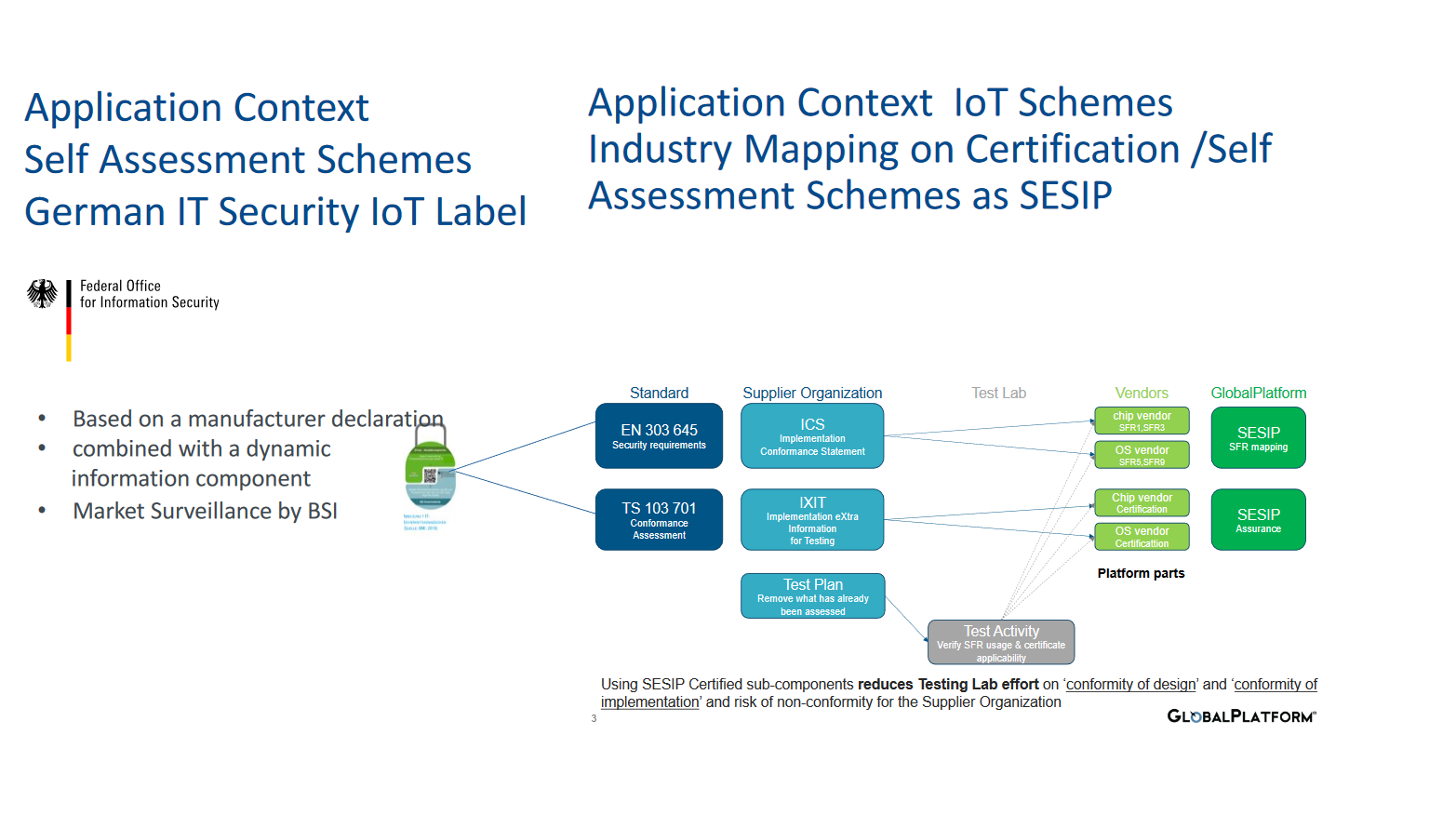
Luis Romero, Director General of ETSI, stressed that there are three clear areas where standards can be used in schemes:
- IoT Security (ETSI standard)
-5G network security and assurance (3GPP, GSMA scheme)
- electronic signatures and infrastructures (standards available in 2016, adopted beyond Europe but not still recognised at EU level)
In Luis Romero’s views, one of the pending challenges is the coordination between schemes and standards. Will the Union Rolling Work Programme be enough for ESOs to prepare adequately?
Andreas Mitrakas, Head of Unit at ENISA, explained that horizontal schemes, such as EUCC and cloud, are likely to find their ways in sector covered by the NIS Directive. NIS areas might be covered by mandatory schemes. There might be a legislation referencing a scheme as mandatory, for instance for trust services.
Miguel Gonzalez-Sancho, Head of Unit at DG CNECT, pointed out that the EU needs to strengthen its presence in standardisation activities at international level. It is not only a technical matter but also a matter of values. The Union Rolling Work Programme contains one section on strategic priorities. The number 1 priority is standardisation. Funding programmes should support the work on standardisation.
|